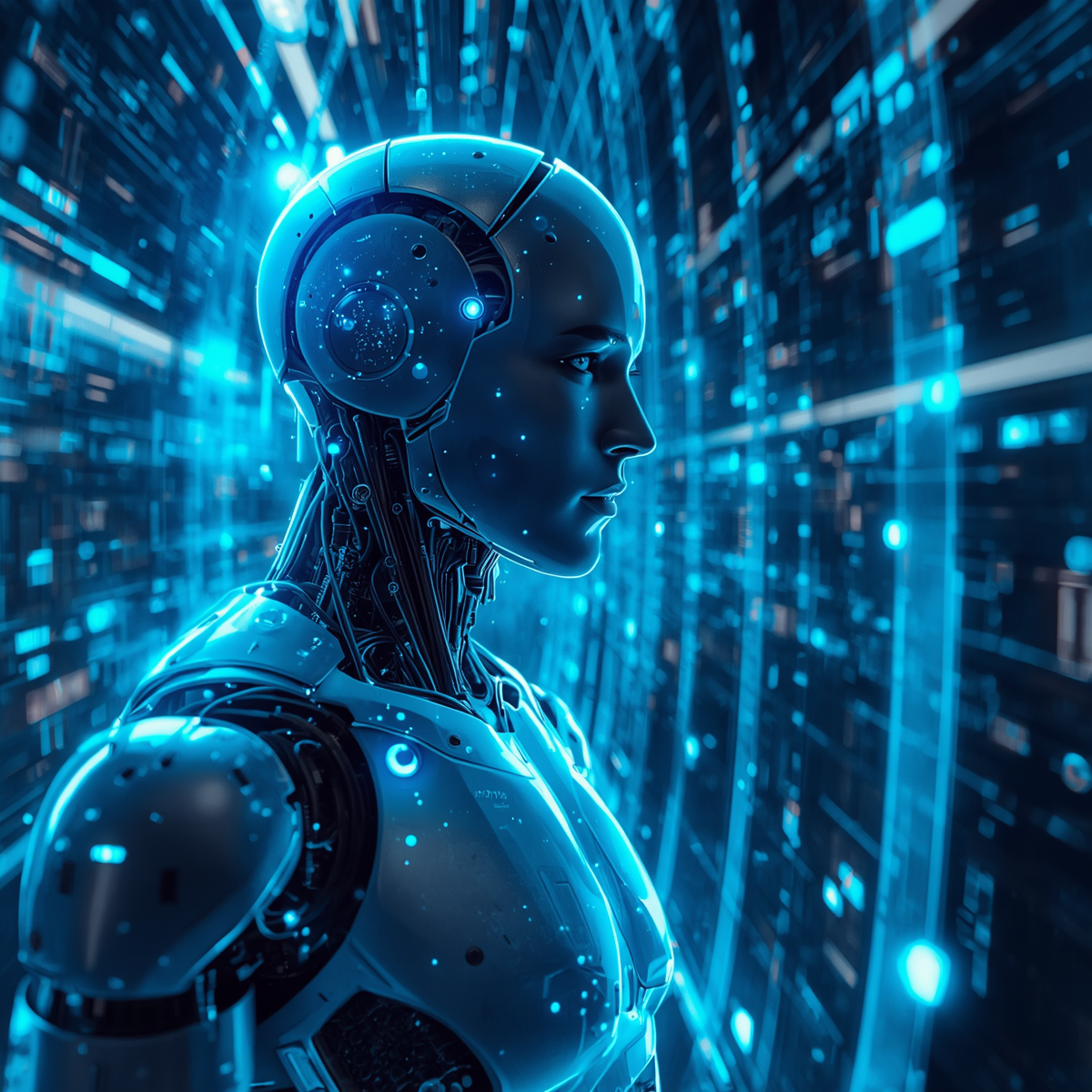
Artificial Intelligence is no longer a concept of science fiction movies. Today, it is deeply integrated into our daily lives, transforming how we work, learn, and communicate.
What is Artificial Intelligence ?
In simple words, Artificial Intelligence is a branch of computer science that enables machines to think, learn, and make decisions like humans. Instead of just following pre-written codes, AI systems analyze massive amounts of data, recognize patterns, and solve complex problems on their own.
3 Real-Life Examples of AI We Use Everyday (H2)
You might be using AI every day without even realizing it. Here are three common examples:
- Smart Assistants (H3)
Tools like Google Assistant, Apple’s Siri, and Amazon’s Alexa use AI to understand your voice commands and reply instantly. - Recommendation Systems (H3)
Have you noticed how YouTube, Netflix, or Spotify always know what you want to watch or listen to next? Their AI algorithms analyze your past choices to suggest the perfect content. - AI Writing Tools (H3)
Applications like ChatGPT and Google Gemini help millions of people write emails, essays, and generate creative ideas in seconds. 4. - Why What is Artificial Intelligence Important for the Future? (H2)
AI is rapidly expanding into healthcare (diagnosing diseases early), finance (detecting fraud), and education (personalized learning). Mastering AI tools today is essential to staying ahead in any career tomorrow.
Different Types of Artificial Intelligence (H2) - To fully grasp what is artificial intelligence, we must understand its two main categories:
- Narrow AI (Weak AI): This type of AI is designed to perform a specific task, such as facial recognition or driving a car. All current AI systems we use today fall under this category.
- General AI (Strong AI): This is a futuristic concept where a machine possesses the ability to understand, learn, and apply knowledge in a way that is indistinguishable from a human being.
- The Future of AI and Automation
- AI is rapidly expanding into healthcare (diagnosing diseases early), finance (detecting fraud), and education (personalized learning). In the coming years, automation driven by AI will replace many repetitive jobs, but it will also create millions of new career opportunities in data science and prompt engineering.
- Pros and Cons of Artificial Intelligence.
- Like any other technology, AI comes with its own set of advantages and challenges.
- Advantages of AI:
- Reduction in Human Error: Machines make fewer mistakes when programmed correctly.
- 24/7 Availability: AI bots can work continuously without getting tired.
- Faster Decisions: AI can process huge data chunks faster than humans.
- Disadvantages of AI:
- High Cost: Creating and maintaining AI software requires heavy investment.
- Job Displacement: Many administrative and manual jobs are at risk.
- Lack of Creativity: AI can copy and learn, but it cannot think creatively like a human brain.
- Conclusion (H2)
- In conclusion, understanding what is artificial intelligence will help us adapt to the upcoming digital era. Rather than fearing AI, we should learn how to use these advanced tools to enhance our productivity. AI is not here to replace humans, but humans using AI will definitely replace those who do not.
History of Artificial Intelligence
To truly understand the depth of what is artificial intelligence, we must look back at its origins. The concept of AI began in the 1950s when scientists started exploring the possibility of creating an electronic brain.
The term “Artificial Intelligence” was officially coined in 1956 during a conference at Dartmouth College. Since then, the technology went through several periods of slow progress, often called “AI Winters.” However, with the rise of modern high-speed internet and powerful computer processors, AI has advanced more in the last ten years than it did in the previous fifty.
How Can Beginners Start Learning AI Today? (H2)
If you want to build a career around AI or simply want to use it to grow your business, you do not need a computer science degree to start.Here is how you can begin your journey:
Learn Prompt Engineering: Master the art of asking ChatGPT or Google Gemini the right questions to get perfect results.
To know more about us, visit our Home Page.